

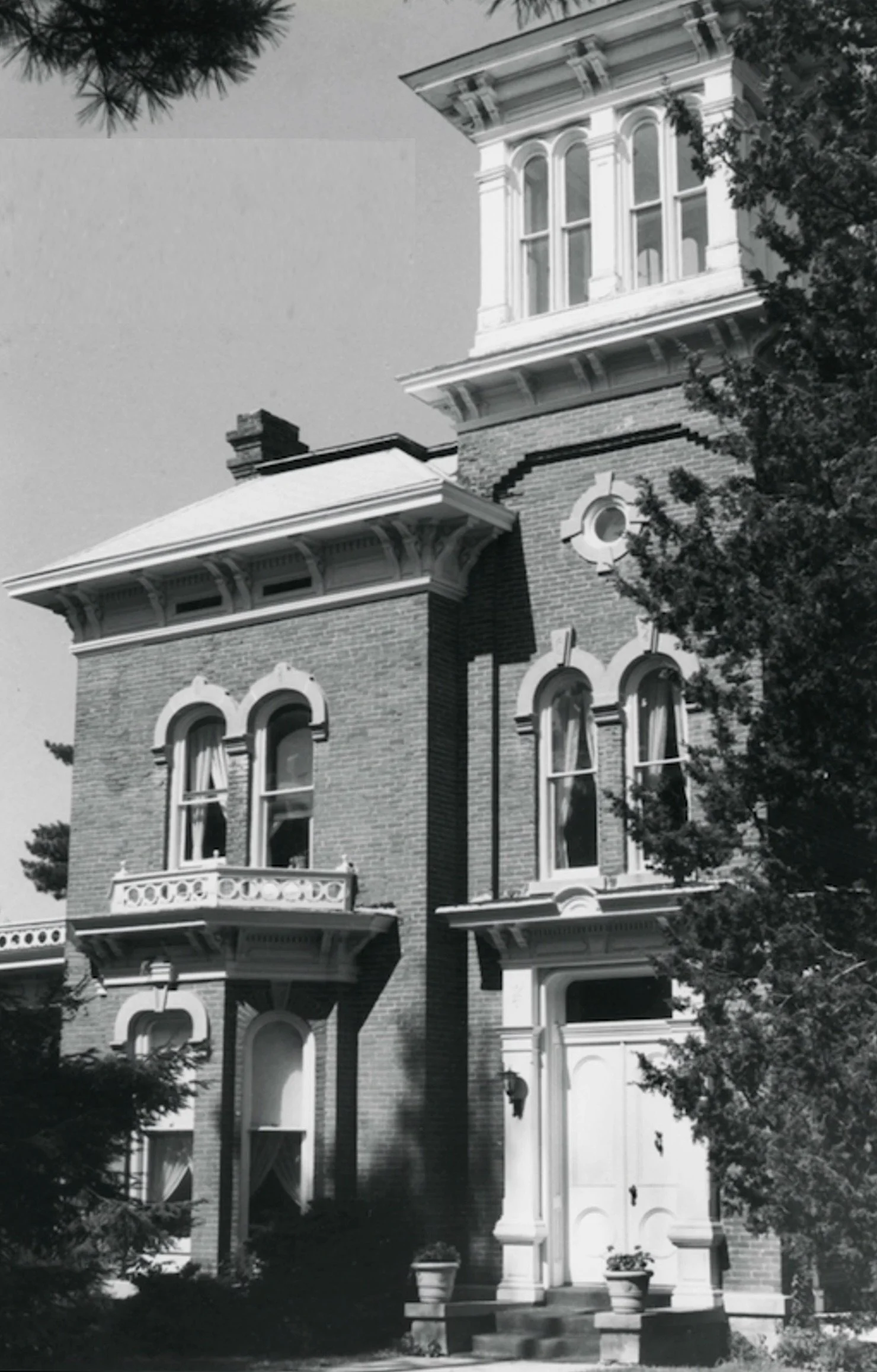
Pinehill,
as the story goes…
...began as an overlooked hill, covered in White Pines, on the outskirts of a still burgeoning frontier town…
When, in 1874, William “Judd” Mix Jr., a self-made man of exacting devotion, saw that hill as one upon which he could erect a devotional piece of architecture to signal to the world his love for Belle. What ensued is a love story which can be seen, touched, and shared to this day, 151-years later…
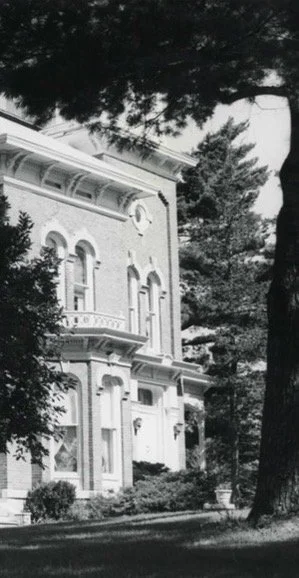
Judd chose this hill to build a testament of his love. It had to be without equal. It had to serve as unbridled expression. It had to withstand time itself.
Every choice was an act of devotion: from the first survey stake driven into the hillside, to each hearth hewn from separate quarries so that no two moments shared before them would ever feel repeated…
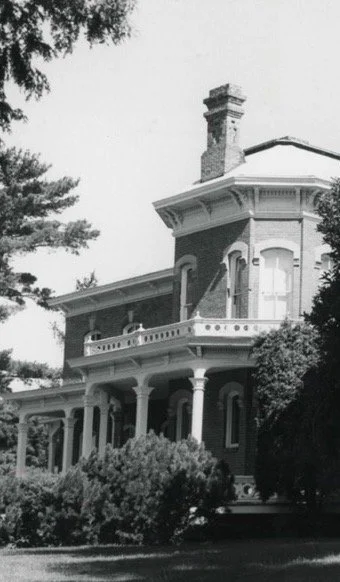
…to a belvedere raised like a beacon of love over the rooftops of town…
…to a hand-blown twenty-four carat gold window so that his love might always peer out through rose-colored glass.
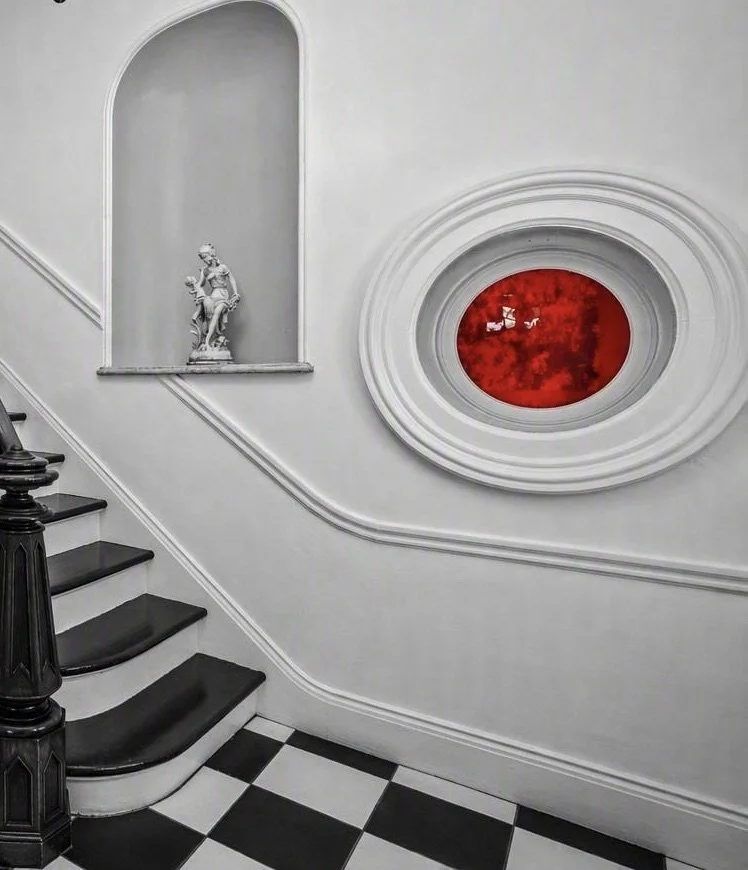
The deepest of expressions was spoken not in words…
…but in limestone, marble, and glass. Proof that true love is constructed; fireplace by fireplace, pane by pane, brick by brick.
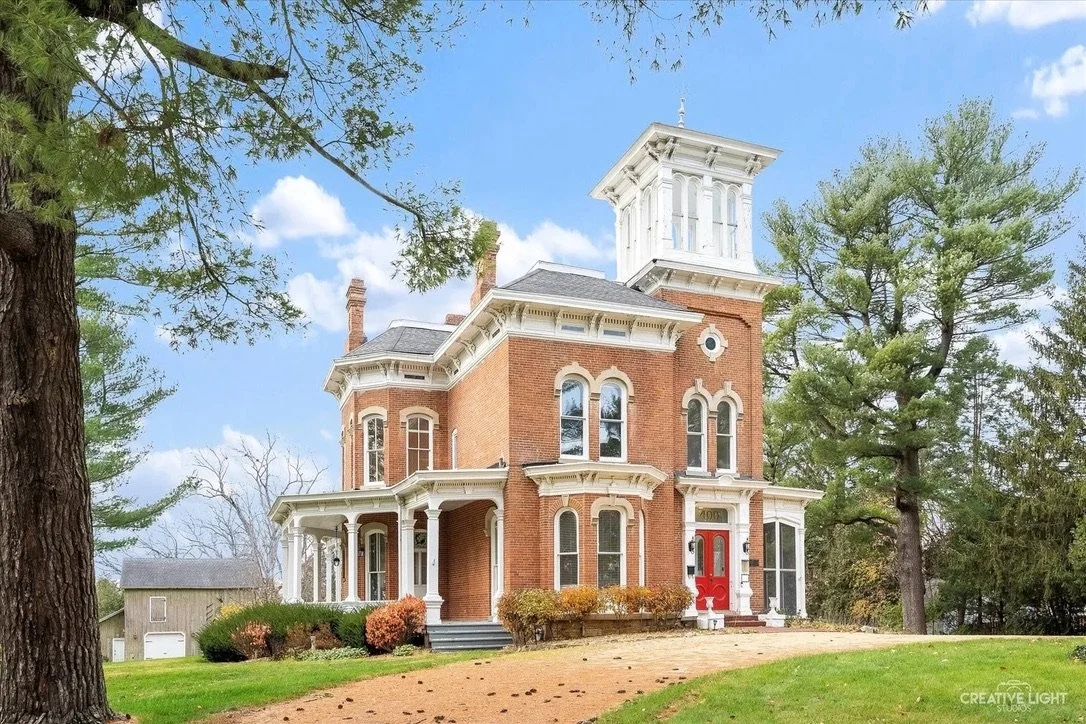
The Italianate Victorian mansion he erected became a period-defining work of architecture and craftsmanship.
Perhaps it is no surprise then, that a house built of expression would attract and inspire artists throughout the next century. Somerset Maugham, the celebrated author, returned again and again through the 1930s and 40s, disappearing into its rooms to write.
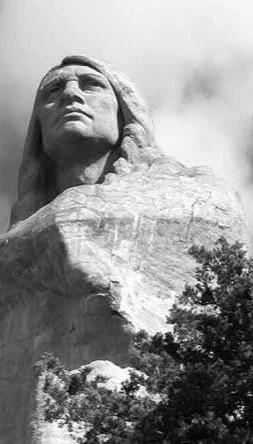
Lorado Taft, the sculptor who carved the great Blackhawk statue still watching over the Rock River, is said to have wandered its grounds as a frequent guest.
Emma Knowlton Lytle, an accomplished painter, sculptor, poet, and documentary filmmaker whose work is preserved by the Delta State University in Mississippi,
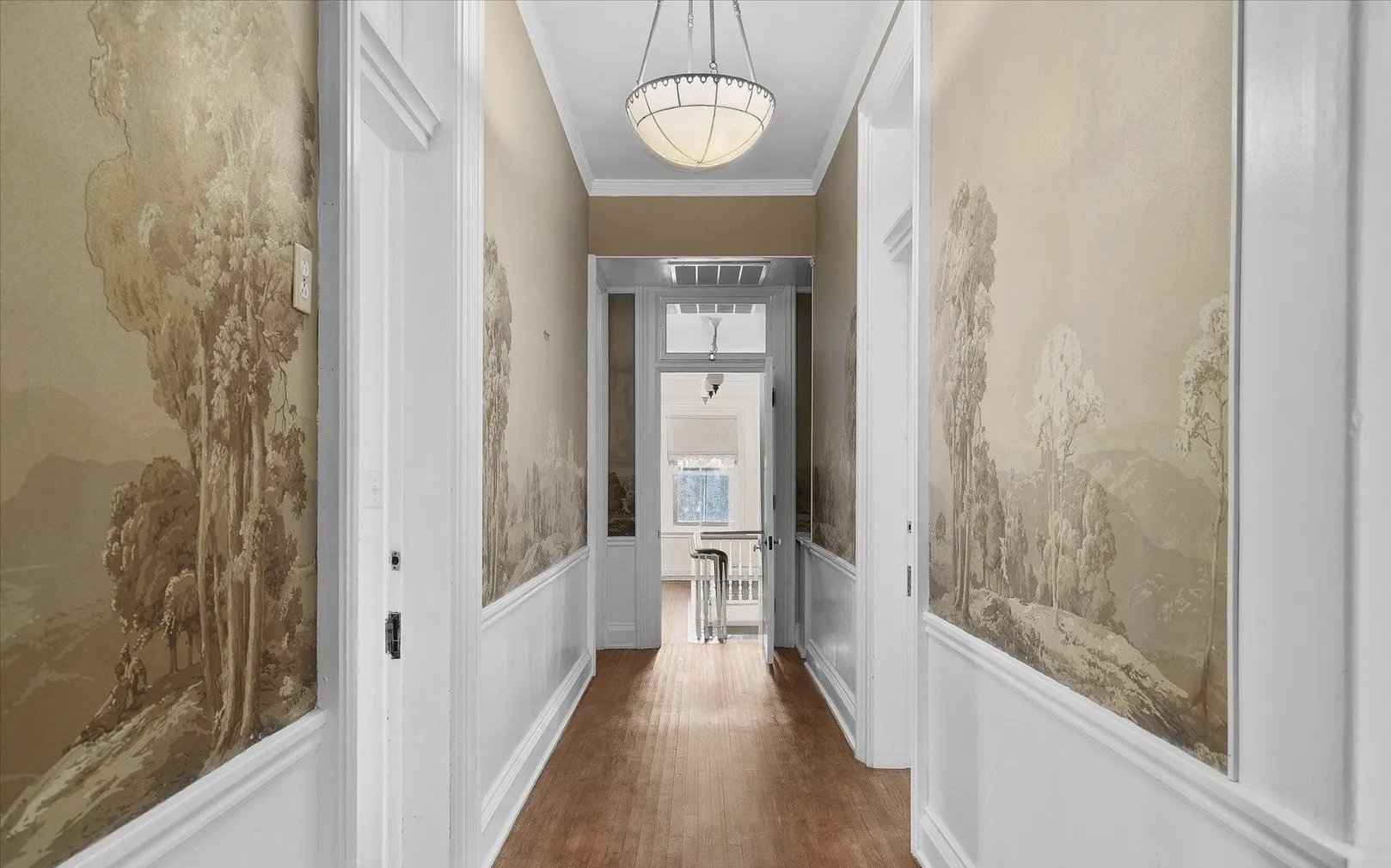
practiced her craft in her home, here at Pinehill.
By 1978, its architecture, unmatched, unrepeated, and unlike any other Italianate villa in the region…
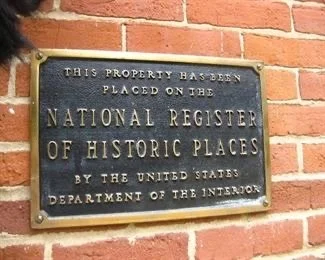
…earned Pinehill its rightful place on the National Register of Historic Places.
Even the camera has been drawn here: in early 2020, Pinehill’s halls and grounds became the set of the holiday film Lacy's Christmas Do-Over…
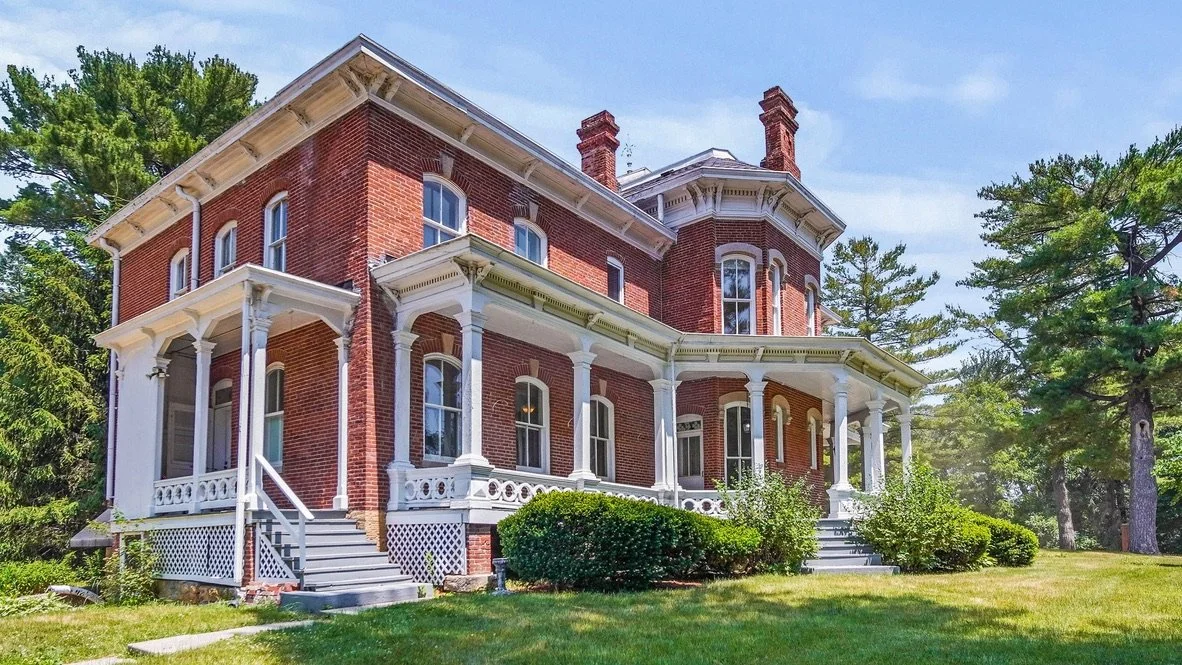
…if only to prove that some backdrops need no invention at all.
And more recently, novelist Marlene Chase found in Pinehill a cover worth returning to.
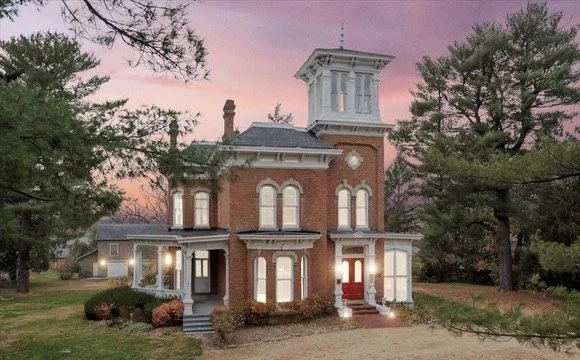
The mansion gracing not one, but two of her Grace Arbor Mysteries; House of Grace and its sequel, Return to Grace.
In the mid-2000s, Pinehill finally opened its doors to the public as a bed and breakfast. For nearly 20-years Ken and Chris Williams cared for the home and shared its inspirations with many…
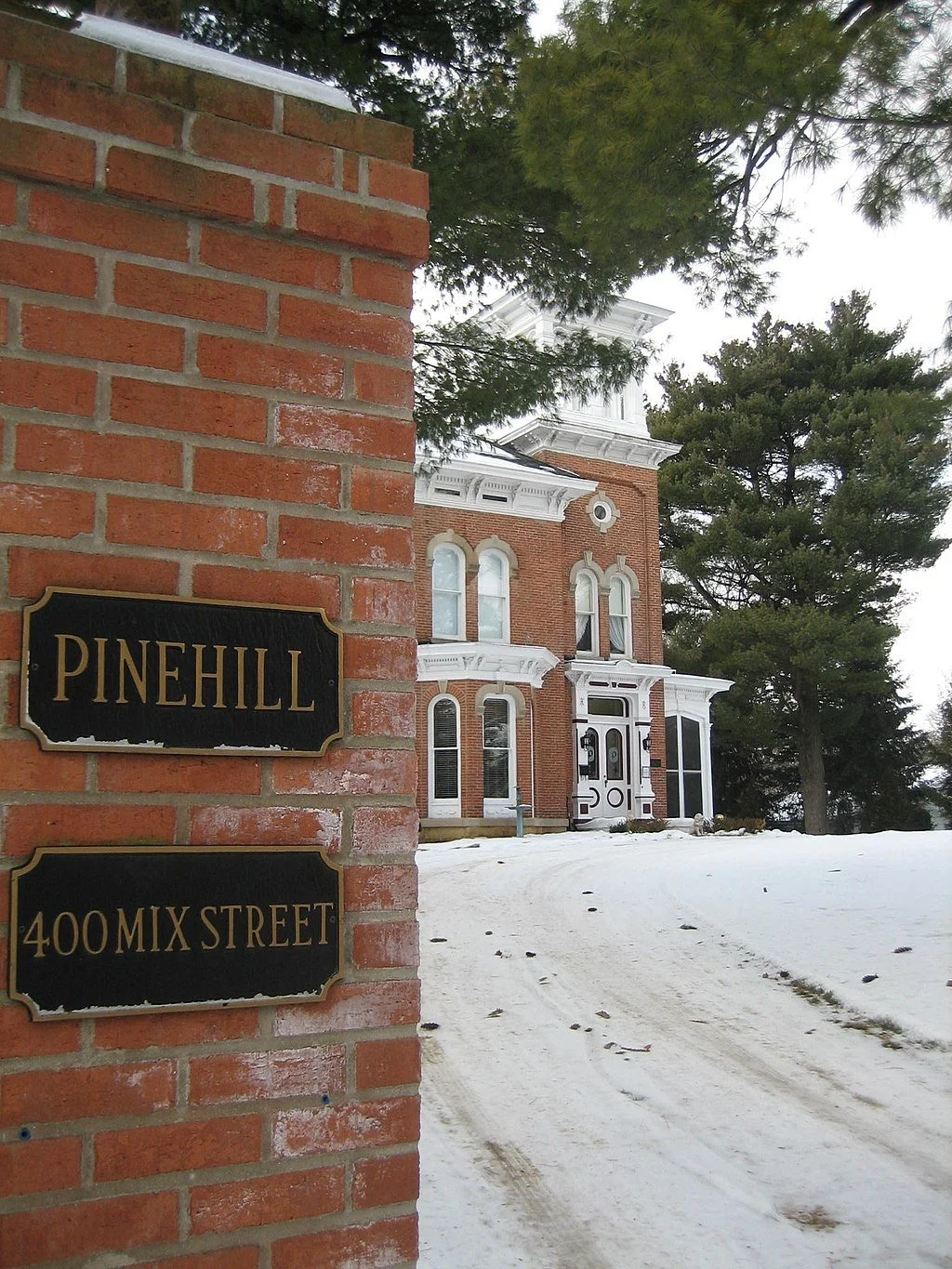
…who found their own inspiration, and created new storylines, within it.
Then, in May of 2024, Andrew, a U.S. Marine combat veteran and his wife Kelleigh arrived; not simply to own the historic home, but to finally let it become what it was always destined to be…

…an Italianate Victorian mansion open at last to every love story willing to write the next chapter…
151 Yeas and Counting...Curious about the full 180-year lineage of Pinehill? Explore the keepers of the hill below:
-
Before Pinehill was a mansion, it was a hillside changing hands. Samuel O. Lockwood homesteaded the land straight from the U.S. government in 1842. Eleven years later, Elias S. Potter purchased it and folded it into his own vision for a growing township — Potter's Addition, the very ground Pinehill would one day rise from. In 1860, the land passed to Henry A. Mix, and upon his death in 1867, to his widow, Mary S. Mix — who held it quietly for five years, waiting, unknowingly, for her nephew to arrive.
-
In 1872, William Judd Mix Jr. took possession of the hill his aunt had held — and two years later, began building the devotional masterpiece told in full above. After eighteen years as its master, Mix sold Pinehill in 1891 for $16,000, closing one chapter even as the house he built for her endured into every one that followed.
-
For twenty-eight years, Ezra J. Kailer simply kept the Pinehill standing; the longest tenure of any owner but one. In 1919, attorney Thomas B. Seyster purchased the estate and gave it the name it would carry for generations: Pine Hill Farm. He held it twice in his lifetime, once outright and once inherited back from his parents, J.C. and Ella M. Seyster, who briefly held the deed between 1931 and 1935. Seyster died in 1948, having spent nearly thirty years bound to the property whose name he chose.
-
Stuart Bruce Lytle of Chicago and his wife, Emma Knowlton Lytle, purchased Pinehill at the close of 1948. Emma — a Radcliffe College graduate who would become an acclaimed painter, sculptor, poet, and documentary filmmaker of the Mississippi Delta held Pinehill for eighteen years before her artistic career reached its fullest bloom. In 1966, in the estate's most unexpected chapter, Pinehill passed into the hands of an Illinois corporation, Culligan-Dixon Water Conditioner Inc., for eleven years; a devotional house, however briefly, filed away in the ledgers of industry.
-
George and Lois Fischer purchased Pinehill in 1977, and it was under their stewardship, in 1978, that Pinehill was formally admitted to the National Register of Historic Places — its significance no longer just local legend, but a matter of national record. Sharon Burdick (1987), Susan Gill (1998), and Ruth Carlson (2001) each carried the hill's legacy forward in turn, keeping it through the final years of one century and the opening of the next.
-
In 2005, Ken and Chris Williams became the first owners to formally open Pinehill to the public, welcoming guests into rooms named for its own legends; the Bonaparte Room, the Rose Room, and more. They hosted weddings, showers, and reunions for seventeen years; during which time Ken also served as the Mayor of Oregon, IL. Clint and Wendy Johnson purchased and renovated the estate in 2022. Then, in May of 2024, Andrew, a U.S. Marine combat veteran, and his wife Kelleigh Miller arrived, not simply to own a historic house, but to uncover the history, the stories, the ties to its surrounding community, and share it all with those it has touched, whether directly or indirectly, for over a century and a half…finally letting it become what it was always destined to be, a beacon of expression and gathering place for the emotionally curious.